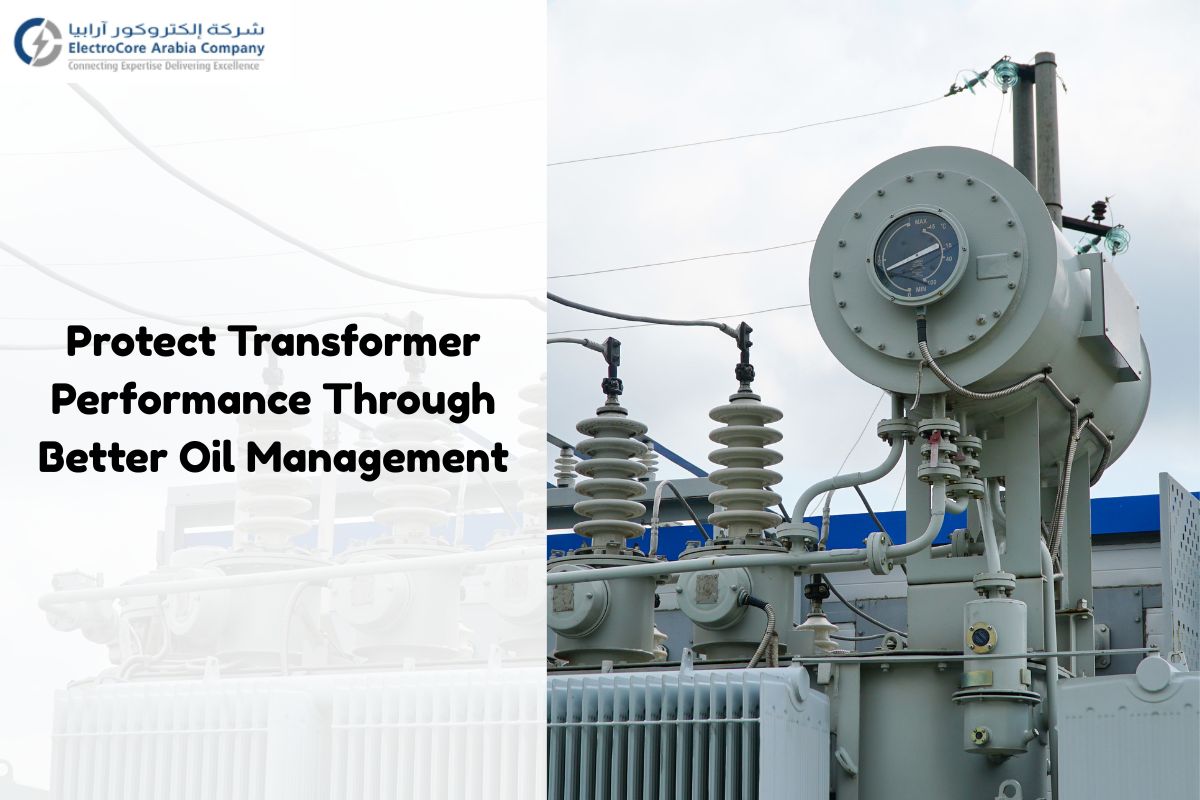
Transformer oil plays an essential role in the safe and reliable operation of oil-filled transformers. It provides electrical insulation between energized components while also transferring heat away from the transformer core and windings.
Over time, however, transformer oil can deteriorate because of moisture, oxidation, contamination, overheating, and exposure to air. Poor oil quality can reduce dielectric strength, accelerate insulation ageing, and increase the risk of transformer faults.
For transformers operating in demanding industrial environments, maintaining oil quality should therefore be an important part of a planned transformer maintenance programme.
Transformer oil performs two primary functions: electrical insulation and heat transfer.
As an insulating medium, the oil helps prevent electrical breakdown between internal transformer components. As a cooling medium, it carries heat away from the windings and core and transfers it to the cooling system.
Good-quality transformer oil should have suitable dielectric strength, low moisture content, appropriate viscosity, good oxidation stability, and minimal contamination.
When these properties deteriorate, the transformer may become more vulnerable to electrical and thermal problems.
Several factors can affect transformer oil during operation and storage.
Moisture is one of the major concerns because even small amounts of water can significantly reduce the dielectric strength of insulating oil. Moisture can also migrate between the oil and solid insulation depending on temperature and operating conditions.
When transformer oil reacts with oxygen over time, oxidation products can form. This can increase acidity and contribute to sludge formation, which may affect heat transfer and insulation performance.
Dust, fibres, carbon particles, rust, and other contaminants can enter the oil through poor handling, maintenance activities, or equipment deterioration. These contaminants can affect the oil’s insulating properties.
High operating temperatures accelerate oil and insulation ageing. Repeated overheating can contribute to faster deterioration and should therefore be considered when evaluating transformer oil condition.
Proper storage is important even before oil is introduced into a transformer.
Transformer oil should be kept in clean, dry and properly sealed containers that protect it from moisture, dust and other contaminants. Containers should be clearly identified and handled in a way that prevents accidental mixing with unsuitable fluids or contaminated oil.
Storage areas should also be protected from unnecessary exposure to rain, standing water and other environmental contaminants.
Before using stored oil, its condition should be verified through appropriate testing rather than assuming that previously unused oil is automatically suitable for service.
Regular testing provides valuable information about changes in oil condition.
Depending on the transformer and maintenance programme, testing may include:
Testing results should be compared with previous measurements and relevant technical requirements. A trend of deterioration can provide an early indication that further investigation or maintenance may be necessary.
For transformers where oil has accumulated moisture or contaminants, transformer oil filtration in Saudi Arabia can be considered as part of an appropriate maintenance programme. Filtration and oil treatment can help remove certain contaminants and improve oil condition, but the treatment method should be selected according to the actual oil test results and transformer requirements.
Proper handling is just as important as storage.
During oil filling, filtration, sampling, or maintenance activities, technicians should take steps to prevent moisture and contamination from entering the transformer.
Good practices include:
Hoses, pumps, tanks, filtration equipment and sampling containers should be clean and suitable for transformer oil service.
Oil should have minimal unnecessary exposure to humid air or open environments during transfer and maintenance.
Oil samples should be collected using appropriate procedures so that laboratory results accurately represent the condition of the transformer oil.
Keep records of oil test results, filtration or treatment activities, transformer loading, operating temperature and previous maintenance. Historical data makes it easier to identify deterioration trends.
Oil filtration should not automatically be performed simply because a transformer has been operating for a particular number of years.
The need for treatment should be based on oil test results, transformer condition, operating history and the nature of the contamination.
If testing identifies excessive moisture, suspended particles or other deterioration, a suitable treatment programme may help restore the oil’s required properties. In more serious cases, additional diagnostic testing may be necessary to determine whether the problem originates from the transformer itself.
For industrial and power-sector clients, ElectroCore Arabia Company Ltd provides transformer oil-related services alongside transformer testing, diagnostics, maintenance, repair and refurbishment, helping asset owners make informed maintenance decisions based on actual equipment condition.
Transformer oil quality has a direct relationship with the reliability and insulation performance of oil-filled transformers. Moisture, oxidation, contamination and excessive heat can gradually affect oil properties and contribute to insulation deterioration.
Regular oil testing, correct storage, careful handling and appropriate filtration or treatment can help maintain oil condition and support reliable transformer operation.
For critical electrical assets, transformer oil should therefore be managed as part of a complete condition-based maintenance strategy, rather than treated as an isolated component.
Read More:
https://electrocorearabia.com/when-should-a-transformer-be-repaired-instead-of-replaced/
Copyright © 2026
ElectroCore Arabia Company. All Rights Reserved. Powered by Webtechnomind IT Solutions Pvt. Ltd
Sunday to Thursday: 8 am to 5 pm
Saturday: 9 am to 4 pm
Friday: Holiday
Copyright © 2026
ElectroCore Arabia Company. All Rights Reserved. Powered by Webtechnomind IT Solutions Pvt. Ltd