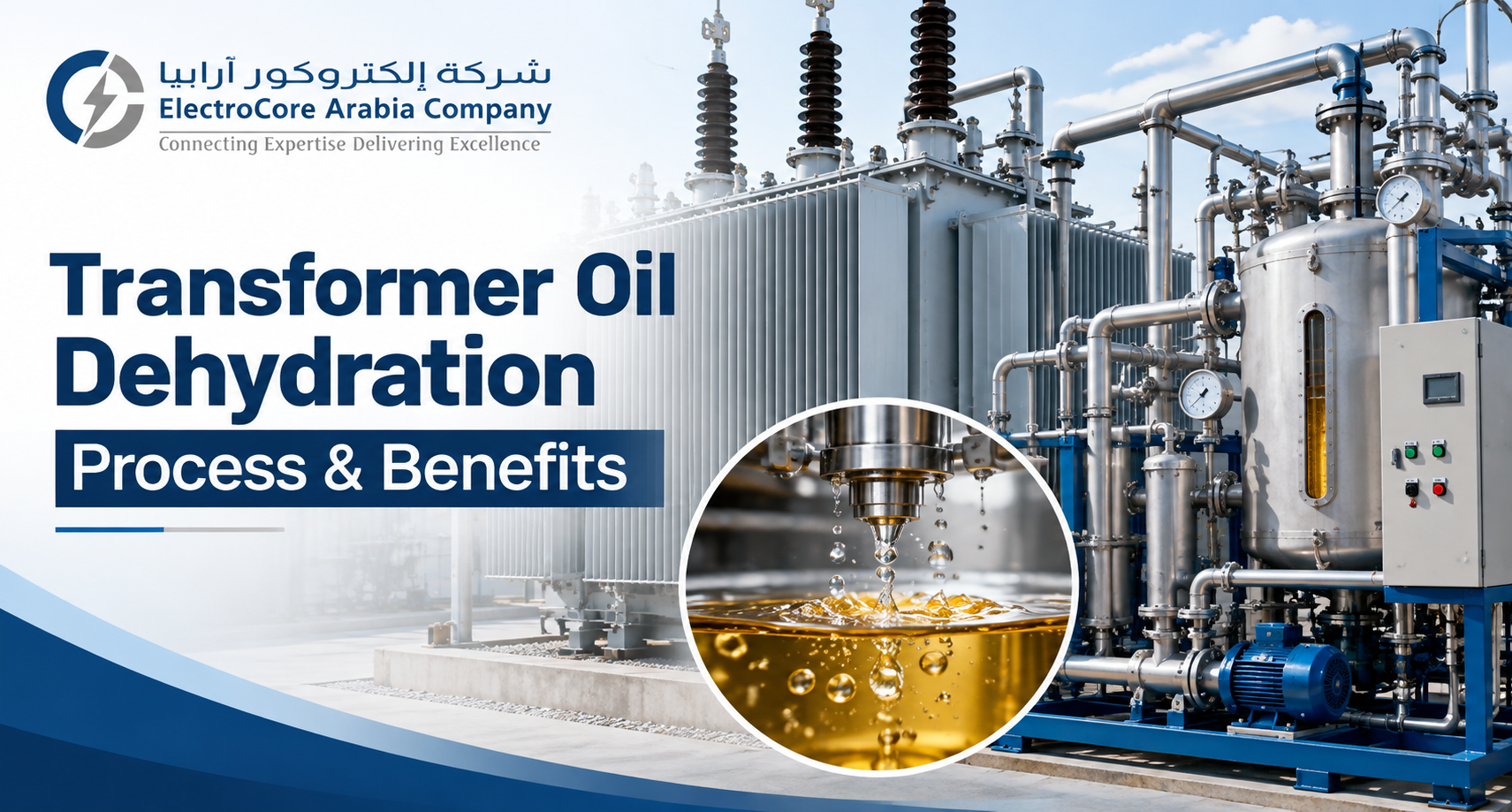
Transformer oil dehydration is an essential maintenance process that helps maintain the performance, reliability, and insulation quality of oil-filled electrical transformers. In power plants, substations, oil and gas facilities, and industrial environments, transformer oil provides electrical insulation and transfers heat away from critical components.
Over time, moisture can enter transformer oil through leaks, damaged seals, ageing insulation, or exposure to humid air. Excessive moisture can reduce dielectric strength and accelerate insulation deterioration.
Professional transformer oil dehydration helps remove excess moisture, maintain suitable oil quality, and support reliable transformer operation. This guide explains the process, key benefits, applications, and maintenance best practices.
Transformer oil dehydration is the process of removing excess water from insulating oil used in electrical transformers. It commonly involves specialised vacuum dehydration equipment that separates moisture from oil under controlled temperature and pressure conditions.
Moisture may exist as dissolved water, suspended droplets, or free water. Excessive moisture can affect the insulating properties of oil and contribute to the ageing of cellulose-based materials, including transformer paper and pressboard.
The main objectives of transformer oil dehydration include:
Depending on the oil condition, dehydration may be combined with transformer oil filtration and degassing.
Moisture contamination can affect transformer performance and increase maintenance risks. Regular oil testing helps identify contamination and determine whether treatment is required.
Transformer oil provides electrical insulation between internal components. Excess moisture can reduce dielectric breakdown voltage and increase the risk of insulation-related electrical problems. Dehydration helps control moisture levels and supports effective insulation performance.
Moisture can accelerate the ageing of paper and pressboard insulation. Managing water contamination helps reduce one of the factors contributing to insulation deterioration and supports the long-term condition of transformer assets.
Unexpected transformer failures can cause production interruptions, power supply disruptions, and expensive repairs. Timely oil treatment helps address moisture-related concerns as part of a comprehensive transformer preventive maintenance programme.
Transformer oil may contain moisture alongside suspended particles, dissolved gases, and chemical degradation products. Dehydration targets water contamination and can be combined with other treatment processes when necessary.
The transformer oil dehydration process generally involves the following stages.
Technicians assess the condition of the transformer oil before treatment. Testing may include moisture content measurement, dielectric breakdown voltage (BDV), acidity, and other relevant oil-quality checks. Dissolved gas analysis (DGA) may also be necessary when investigating potential transformer faults.
Initial testing establishes a baseline and helps determine the appropriate treatment method. Learn more about transformer oil quality and proper handling.
A suitable oil treatment unit is connected to the transformer using compatible hoses and fittings. Equipment selection depends on the transformer’s oil volume, contamination level, and operating requirements.
Technicians must follow approved safety procedures, equipment instructions, and applicable electrical isolation requirements.
The oil is heated to a controlled temperature recommended for the treatment equipment and transformer. Heating reduces oil viscosity and helps moisture separate more readily under vacuum conditions.
Temperature must be carefully managed to avoid unnecessary thermal stress or oil degradation.
The oil passes through a vacuum chamber, where reduced pressure allows water to evaporate more readily. The resulting water vapour is extracted from the system, reducing the moisture content of the processed oil.
Treatment effectiveness depends on vacuum pressure, temperature, flow rate, initial moisture levels, equipment design, and the condition of the transformer’s solid insulation.
Where necessary, the oil is also filtered to remove suspended particles and processed through a degassing system to remove dissolved gases and entrained air.
These treatments complement dehydration but serve different purposes. ElectroCore Arabia’s transformer oil filtration and treatment solutions cover oil diagnostics, moisture removal, filtration, degassing, and other oil-treatment requirements.
After treatment, technicians test the oil again to evaluate moisture content and other relevant quality parameters. Results are compared with initial measurements and applicable technical specifications to verify whether the treatment objectives have been achieved.
Important: Transformer oil dehydration primarily treats the oil. If substantial moisture remains in the paper insulation, a separate transformer drying procedure may be necessary.
Professional transformer oil dehydration offers several benefits for industrial facilities.
Actual results depend on transformer condition, contamination levels, and the effectiveness of the treatment process.
Transformer oil dehydration is used across industries where reliable electrical equipment is essential.
Power stations use transformers to transfer electricity from generating equipment to transmission networks. Oil dehydration supports the maintenance of generator transformers and auxiliary transformers.
Substations depend on power and distribution transformers to maintain electricity transmission and distribution. Regular oil testing and appropriate treatment help maintain insulation performance.
Refineries, gas processing plants, pumping stations, and related industrial facilities rely on dependable electrical systems. Transformer oil dehydration can form part of their preventive maintenance programmes.
Petrochemical facilities, factories, steel plants, and cement plants often operate transformers under demanding conditions. Proper oil maintenance helps manage moisture contamination and support continuous operations.
Hospitals, data centres, commercial buildings, and transport facilities may use oil-filled transformers to distribute electricity. Effective maintenance helps support electrical reliability and operational continuity.
| Process | Primary purpose |
|---|---|
| Dehydration | Removes excess moisture from transformer oil. |
| Filtration | Removes suspended solid particles. |
| Degassing | Removes dissolved gases and entrained air. |
| Oil reclamation | Treats certain chemical degradation products in aged oil. |
| Insulation drying | Reduces moisture within solid insulation materials. |
Selecting the correct treatment requires an assessment of oil test results and transformer condition.
To achieve effective results, transformer operators should follow these practices:
Condition-based maintenance is generally more effective than applying the same treatment schedule to every transformer.
Industrial facilities across Saudi Arabia require reliable transformer maintenance to support power distribution, manufacturing, oil and gas operations, and other critical activities.
ElectroCore Arabia provides transformer-related maintenance and technical services for industrial applications. Its capabilities include oil diagnostics, moisture removal, filtration, degassing, and other transformer oil treatment procedures.
Businesses experiencing moisture contamination or deteriorating oil test results should arrange a professional assessment to determine whether dehydration, filtration, degassing, or additional maintenance is required.
Explore ElectroCore Arabia’s transformer services in Saudi Arabia to learn more about inspection, diagnostics, maintenance, repair, and oil treatment. Facilities requiring specialised equipment can also explore transformer oil filtration machine rental solutions.
Transformer oil dehydration removes excess moisture from insulating oil, commonly using controlled heating and vacuum treatment.
Excess moisture can reduce dielectric strength and contribute to the deterioration of paper-based insulation, potentially increasing electrical reliability risks.
Vacuum dehydration is widely used because it allows water to evaporate under reduced pressure and be separated from the oil.
The frequency depends on moisture measurements, oil test results, operating conditions, transformer design, and manufacturer recommendations.
Reducing moisture may improve dielectric breakdown voltage when water contamination is a significant cause of poor results. Post-treatment testing is necessary to verify the outcome.
Transformer oil dehydration is an important maintenance process that helps control moisture contamination, support dielectric performance, and protect transformer insulation. It is particularly valuable for power plants, substations, oil and gas facilities, petrochemical industries, and manufacturing operations.
Combining regular oil testing with appropriate dehydration, filtration, and preventive maintenance helps industrial operators maintain reliable electrical equipment.
Contact ElectroCore Arabia to discuss transformer oil maintenance, oil-quality testing, and suitable treatment solutions for your industrial facility in Saudi Arabia.
Copyright © 2026
ElectroCore Arabia Company. All Rights Reserved. Powered by Webtechnomind IT Solutions Pvt. Ltd
Sunday to Thursday: 8 am to 5 pm
Saturday: 9 am to 4 pm
Friday: Holiday
Copyright © 2026
ElectroCore Arabia Company. All Rights Reserved. Powered by Webtechnomind IT Solutions Pvt. Ltd