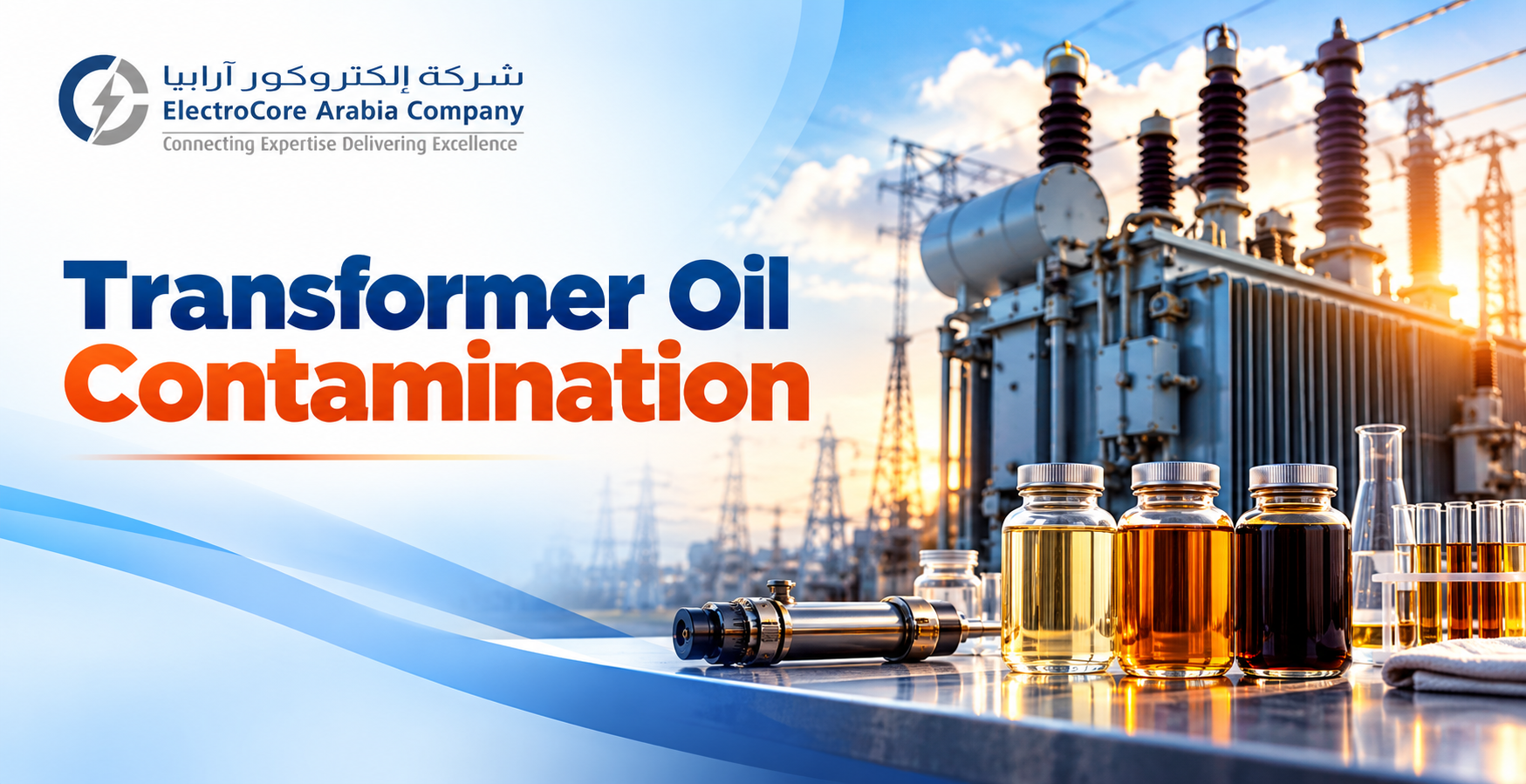
Transformer oil plays a vital role in oil-filled power transformers. It provides electrical insulation between energized components and transfers heat away from the core and windings. When transformer oil contamination develops, these functions can be affected, increasing the risk of overheating, insulation deterioration and unplanned outages. For industrial facilities, utilities and power-sector operators, identifying contamination early is an important part of transformer reliability management.
Contamination can develop gradually during normal service or enter the transformer through leaks, poor handling, maintenance activities or unsuitable storage. A planned approach that combines oil sampling, laboratory testing, inspection and condition-based treatment helps maintenance teams make informed decisions before a minor issue becomes a major fault.
Transformer oil contamination occurs when unwanted substances enter the insulating oil or are generated inside the transformer during operation. Common contaminants include water, dust, fibres, metal particles, carbon deposits, sludge, oxidation products and dissolved gases. The type and concentration of contamination determine its effect on oil quality and equipment condition.
Not every abnormal oil result has the same meaning. Moisture and suspended particles can affect dielectric performance, while dissolved gases may indicate overheating, partial discharge or arcing inside the equipment. Oil results should therefore be interpreted alongside the transformer’s operating history, inspection findings and other diagnostic tests.Main Causes of Transformer Oil Contamination
Water can enter through deteriorated gaskets, damaged seals, leaking valves, defective breathers or poorly controlled maintenance work. Condensation and humid environmental conditions may also contribute. Moisture is a concern because it can reduce the dielectric strength of oil and accelerate ageing of the solid paper insulation. A transformer may require checks of seals, breathers, oil-handling procedures and insulation condition when moisture levels rise.
Dust, fibres and other particles may enter during oil transfer, storage, repairs or servicing. Internal wear and corrosion can also generate particles. Suspended contaminants can compromise oil cleanliness and may contribute to electrical stress in the insulation system. Clean transfer equipment, sealed containers, suitable filtration and controlled maintenance practices help reduce this risk.
Heat, oxygen and time can cause insulating oil to oxidize. Oxidation may produce acids, sludge and other degradation products. Sludge can deposit on internal surfaces and cooling passages, potentially affecting heat transfer. Oil condition should be assessed using appropriate tests, such as acidity and interfacial tension, alongside the transformer’s service history and operating conditions.
Abnormal heating, partial discharge or arcing can generate gases and carbonaceous materials within the transformer. Dissolved Gas Analysis (DGA) can help identify patterns associated with developing thermal or electrical faults. DGA is not a stand-alone diagnosis: results should be evaluated by qualified personnel and, where indicated, supported by additional electrical tests and an internal inspection.
Using contaminated hoses, open containers, unsuitable storage tanks or inadequately cleaned equipment can introduce moisture and particles into otherwise serviceable oil. Oil should be handled using clean, dry, compatible equipment and stored in sealed containers according to supplier recommendations. Records of oil batches, sampling, treatment and transfer activities also improve traceability.
Moisture and other contaminants can reduce the insulating capability of transformer oil. Under electrical stress, this may increase the risk of insulation-related problems and can affect the reliability of the transformer’s insulation system.
Degraded oil or sludge deposits may impair cooling performance. If heat cannot be removed effectively, operating temperatures may rise and accelerate the ageing of insulation and other components.
If contamination remains undetected, a manageable oil-quality issue may develop into a more serious equipment problem. Unexpected outages can disrupt production, affect power availability and lead to costly corrective work. Trending oil-test results helps maintenance teams plan interventions more effectively.
A regular oil-testing programme can identify changes before visible symptoms appear. Depending on transformer type, operating conditions and maintenance requirements, testing may include:
Results should be compared with applicable standards, equipment requirements and previous test records. A single result is useful, but trends over time often provide better insight. Oil analysis should also be considered alongside transformer inspection, cooling-system checks and electrical diagnostics.
Set testing intervals based on equipment criticality, age, loading, environmental conditions, manufacturer guidance and historical results. Transformers showing unusual trends or operating in demanding environments may need more frequent assessment.
Inspect seals, gaskets, valves, radiators, conservators and breathers. Repair oil leaks promptly and investigate recurring moisture problems rather than treating the oil alone. Maintain clean, dry procedures whenever sampling, filling or transferring oil.
When test results identify removable moisture, particles or dissolved gases, qualified specialists can determine whether filtration, dehydration, degassing, reclamation or another treatment is appropriate. Treatment should be selected according to the contaminant and the oil’s condition. Filtration does not automatically correct every form of oil degradation or resolve an underlying transformer fault.
Maintain a history of oil tests, treatment work, top-ups, repairs, loading and abnormal operating events. Investigate sudden changes and follow up treatment with appropriate testing to verify the result. Where DGA suggests a possible internal fault, obtain a technical assessment before assuming that oil treatment alone will solve the problem.
Transformer oil contamination should be managed as part of a wider transformer maintenance programme. ElectroCore Arabia provides transformer inspection, testing, diagnostics, maintenance and oil-related services for industrial and power-sector applications in Saudi Arabia.
Explore Transformer Services for oil diagnostics and treatment, including moisture measurement, acidity and BDV testing, DGA, filtration, dehydration, degassing and oil reclamation. Facilities that require equipment for oil treatment can also review transformer oil filtration solutions. These services can help maintenance teams assess oil condition and select an appropriate response based on test results and equipment requirements.
Transformer oil contamination can result from moisture ingress, particles, oxidation, overheating, internal electrical faults and poor oil handling. Because transformer oil supports both insulation and cooling, contamination can affect equipment reliability and increase the risk of operational disruption.
The most effective response is preventive: use clean handling procedures, inspect for leaks, monitor oil condition, compare test results over time and select treatment based on a technical assessment. Combining oil diagnostics with comprehensive transformer maintenance helps asset owners make better-informed decisions and support long-term power-system reliability.
Contact ElectroCore Arabia to discuss transformer oil testing, treatment and maintenance requirements.
Copyright © 2026
ElectroCore Arabia Company. All Rights Reserved. Powered by Webtechnomind IT Solutions Pvt. Ltd
Sunday to Thursday: 8 am to 5 pm
Saturday: 9 am to 4 pm
Friday: Holiday
Copyright © 2026
ElectroCore Arabia Company. All Rights Reserved. Powered by Webtechnomind IT Solutions Pvt. Ltd