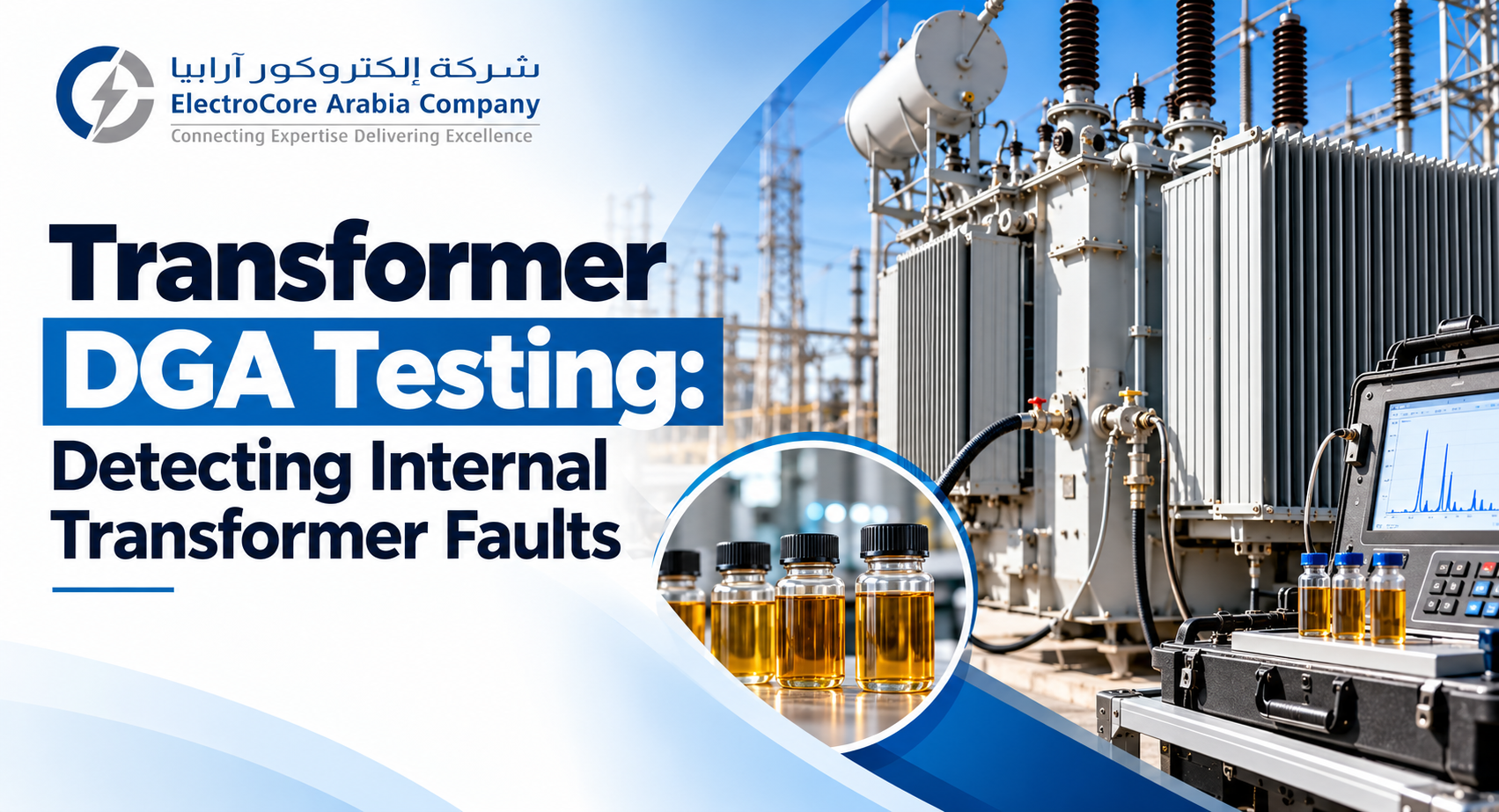
Power transformers are critical components of industrial facilities, substations, power generation plants, and electrical distribution networks. Through its transformer maintenance and diagnostic content, Electrocore Arabia highlights the importance of identifying internal transformer faults before they cause unexpected downtime. Reliable transformer operation is essential for maintaining power supply, preventing shutdowns, and protecting expensive electrical equipment. However, internal transformer faults can develop gradually without visible external warning signs. If these problems remain undetected, they may lead to insulation failure, severe equipment damage, costly repairs, or unplanned outages.
Transformer Dissolved Gas Analysis (DGA) testing is a widely used diagnostic technique for identifying developing faults inside oil-filled power transformers. By analysing gases dissolved in transformer insulating oil, maintenance specialists can detect signs of overheating, electrical discharge, insulation deterioration, and other abnormal operating conditions before they develop into major failures.
For industrial facilities in Saudi Arabia, where reliable electrical infrastructure is essential for continuous operations, regular transformer oil testing and condition monitoring can support equipment reliability and preventive maintenance.
Transformer Dissolved Gas Analysis (DGA) is a diagnostic method used to detect and evaluate gases dissolved in the insulating oil of an oil-filled transformer. These gases are generated when electrical or thermal stresses affect the transformer oil, paper insulation, and other internal components.
Under normal operating conditions, small quantities of certain gases may be present in transformer oil. However, abnormal increases in specific gases can indicate an emerging fault.
During DGA testing, a representative transformer oil sample is collected and analysed using laboratory techniques, commonly gas chromatography. The results identify the types and concentrations of dissolved gases, usually reported in parts per million (ppm). Engineers interpret these results alongside operating conditions, previous test reports, gas generation trends, and other diagnostic findings.
Common gases evaluated during transformer DGA testing include:
No single gas automatically confirms a particular fault. Accurate diagnosis requires consideration of gas concentrations, combinations, trends, and the transformer’s operating history.
DGA can reveal abnormal gas generation associated with developing thermal or electrical faults. Early identification allows maintenance engineers to investigate the problem before it progresses.
Unexpected transformer failures can interrupt production, disrupt facility operations, and create substantial financial losses. Periodic DGA testing supports condition-based maintenance by helping teams identify transformers that require further investigation.
Transformer oil and solid insulation work together to provide electrical insulation and heat dissipation. Abnormal thermal or electrical conditions can degrade these materials. Monitoring dissolved gases provides useful information about possible insulation deterioration.
DGA results help maintenance teams prioritise inspections, schedule additional diagnostic tests, and make better-informed maintenance decisions.
Identifying a developing fault may allow engineers to take corrective action before it causes extensive damage. However, DGA is a diagnostic aid, not a guarantee that transformer failure can be prevented.
DGA testing helps identify patterns associated with different types of transformer faults. The findings must always be interpreted in context rather than treated as definitive proof based on a single gas reading.
Thermal faults occur when transformer oil, conductors, connections, or other components experience excessive temperatures. Possible causes include overloading, poor electrical connections, cooling system problems, or localised hot spots. Elevated methane, ethane, and ethylene concentrations may provide evidence of thermal activity. The gas pattern can help engineers investigate the likely severity and location of the problem.
Partial discharge is a localised electrical discharge that does not completely bridge the insulation between conductors. It may develop because of insulation defects, voids, contamination, or electrical stress. Hydrogen is often associated with partial discharge, although other gases may also be present. Additional diagnostic testing may be necessary to confirm the underlying issue.
Arcing is a high-energy electrical fault that can cause severe internal damage if it continues. Acetylene is an important indicator when evaluating possible arcing, particularly when its concentration or rate of increase is abnormal. A significant rise in acetylene should be assessed promptly by qualified transformer specialists, especially when accompanied by other abnormal findings or operational symptoms.
Cellulose-based transformer insulation can deteriorate because of heat, moisture, oxidation, and ageing. Carbon monoxide and carbon dioxide may help indicate changes affecting paper insulation. These gases are not conclusive indicators on their own. Their concentrations, relationship, historical trends, and other insulation condition measurements should be considered together.
Excessive heat and electrical stress can cause transformer oil to decompose and release combustible gases. DGA can help identify these changes and guide further investigation into the transformer’s operating condition. For a more comprehensive assessment of insulating oil, facilities can combine gas analysis with appropriate transformer oil testing and analysis services, subject to the diagnostic services available.
The process begins with identifying the transformer, reviewing its operating history, and collecting an oil sample from an appropriate sampling point. Sampling equipment and containers must be suitable for the test method. Careful handling is essential because contamination, air exposure, or incorrect sampling practices can affect the reliability of the results.
The oil sample is analysed to identify and quantify dissolved gases. Gas chromatography is a commonly used method for separating and measuring individual gas components. The resulting report records the concentrations of the gases detected in the sample.
Engineers assess the results using recognised diagnostic approaches, such as the methods described in IEC 60599 and IEEE C57.104, where applicable. Interpretation may consider gas ratios, key gas patterns, total dissolved combustible gases, and the relationship between individual gases. The appropriate method depends on the transformer type, test data, and applicable standard.
A single DGA result provides a snapshot of the transformer’s condition. Comparing it with historical reports can reveal whether gas concentrations are stable, increasing, or changing rapidly. The rate of gas generation is often an important consideration when assessing developing faults.
Based on the results, specialists may recommend repeat sampling, closer monitoring, additional electrical tests, an inspection, or corrective maintenance. Urgent action may be necessary when the results indicate a potentially serious fault. Decisions about continued operation should consider the complete technical assessment and the manufacturer’s guidance.
The appropriate testing frequency depends on transformer criticality, operating conditions, age, previous test results, and applicable maintenance requirements. DGA testing may be appropriate in the following situations:
Transformers with abnormal gas trends may require more frequent sampling than equipment with stable results. Testing intervals should be established by qualified personnel rather than applied uniformly to every transformer.
Industrial facilities across Saudi Arabia depend on reliable transformers to support manufacturing, commercial operations, infrastructure, and essential electrical systems. High ambient temperatures, heavy electrical loads, and demanding operating schedules can make effective transformer maintenance particularly important. These conditions do not automatically indicate a transformer fault, but they reinforce the value of monitoring equipment condition and investigating abnormal results promptly.
A structured transformer maintenance programme can combine DGA testing with other appropriate diagnostic activities, including insulating oil condition assessment, electrical testing, and equipment inspections.
Depending on the facility’s requirements, maintenance teams may also consider transformer maintenance services and transformer oil filtration services as part of a broader asset reliability strategy. These links should be directed to the corresponding dedicated service pages on the Electrocore Arabia website.
The right combination of services depends on the diagnostic findings. Oil filtration, for example, can help address certain oil contamination and condition issues, but it does not repair internal arcing, damaged windings, or defective insulation. Such problems require appropriate engineering assessment and corrective action.
DGA is an important diagnostic tool, but it does not provide a complete assessment of transformer health. Other tests may be required to investigate specific problems:
The choice of tests depends on the transformer design, operating history, DGA findings, and suspected fault. Combining appropriate methods can provide a more complete understanding of equipment condition.
DGA stands for Dissolved Gas Analysis. It is a diagnostic technique that measures gases dissolved in transformer insulating oil to help identify possible internal electrical faults, overheating, and insulation deterioration.
Acetylene is strongly associated with high-energy electrical arcing in oil-filled transformers. However, the concentration, rate of increase, presence of other gases, and operating history must be evaluated before drawing conclusions.
Testing frequency depends on the transformer’s criticality, condition, operating environment, applicable standards, and previous results. A qualified maintenance specialist should establish an appropriate testing schedule.
DGA testing cannot guarantee prevention of transformer failure. It can identify warning signs that support early investigation and timely maintenance, potentially reducing the risk of severe damage and unplanned outages.
No. DGA is one component of transformer condition assessment. Depending on the findings, oil quality analysis, electrical tests, inspections, and other diagnostic methods may also be necessary.
Abnormal results should be reviewed by qualified transformer specialists. Depending on the severity and rate of change, the recommended response may include repeat sampling, additional diagnostics, increased monitoring, or urgent corrective action.
Transformer DGA testing is an essential diagnostic tool for identifying potential internal faults in oil-filled power transformers. By analysing dissolved gases, monitoring changes over time, and interpreting results alongside other diagnostic information, maintenance teams can identify warning signs of overheating, partial discharge, arcing, and insulation deterioration.
For industrial facilities in Saudi Arabia, incorporating DGA into a structured transformer maintenance programme can improve fault detection, support maintenance planning, and help protect critical electrical assets.
Electrocore Arabia supports industrial customers seeking information about transformer condition assessment and maintenance requirements. By combining appropriate diagnostic testing with a structured maintenance programme, facility teams can investigate warning signs, plan corrective action, and help protect critical electrical assets.
Contact Electrocore Arabia to discuss an appropriate transformer testing and maintenance approach for your facility.
Copyright © 2026
ElectroCore Arabia Company. All Rights Reserved. Powered by Webtechnomind IT Solutions Pvt. Ltd
Sunday to Thursday: 8 am to 5 pm
Saturday: 9 am to 4 pm
Friday: Holiday
Copyright © 2026
ElectroCore Arabia Company. All Rights Reserved. Powered by Webtechnomind IT Solutions Pvt. Ltd