
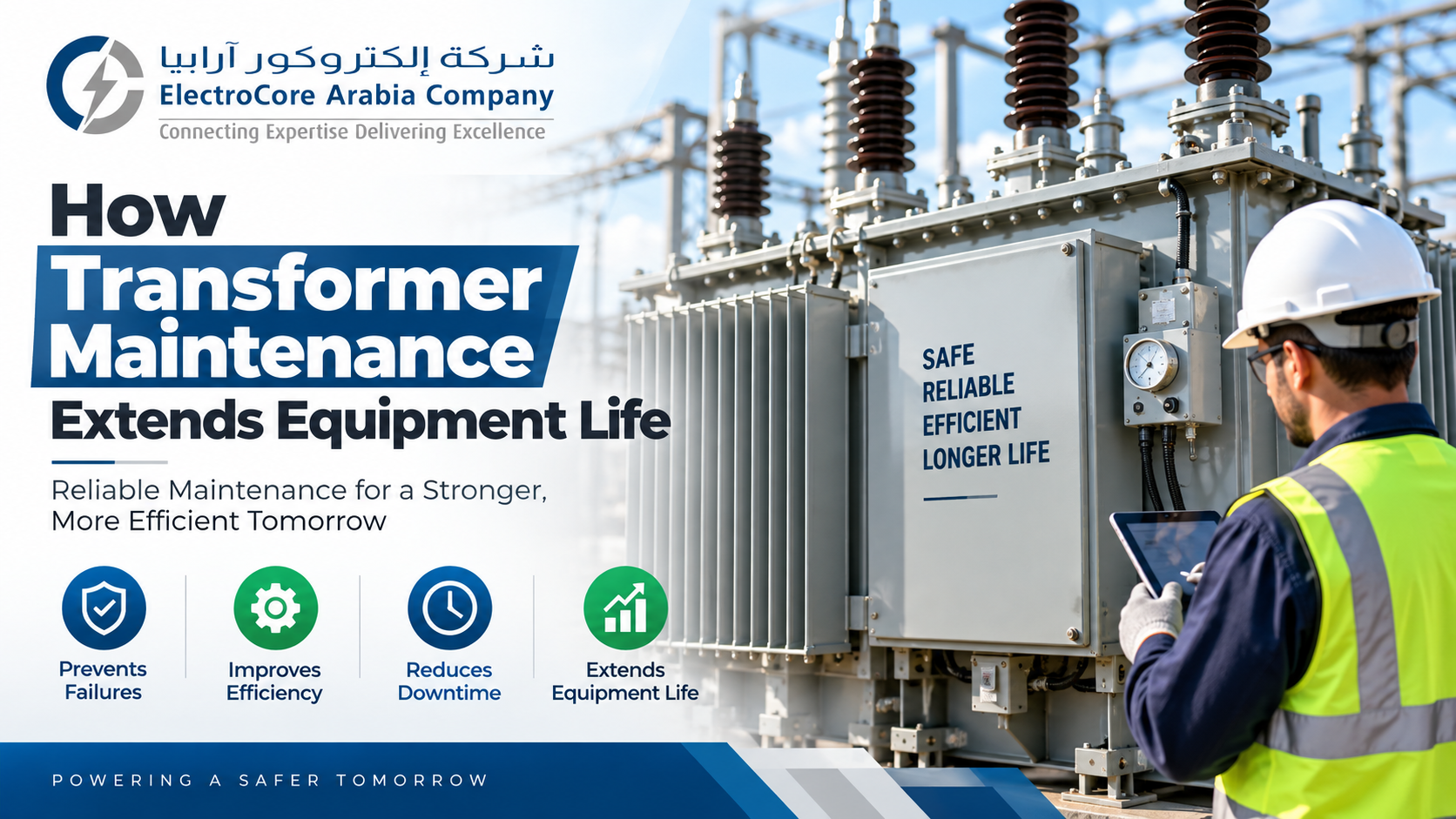

How Transformer Maintenance Extends Equipment Life
Transformers are essential components of modern electrical power systems. From industrial facilities and commercial buildings to utility networks and infrastructure projects, transformers ensure that electrical power is delivered at the appropriate voltage for safe and efficient operation. Because transformers often operate continuously under significant electrical and thermal loads, transformer maintenance is essential for maintaining their performance and extending their service life.
Without proper maintenance, transformers can gradually develop problems such as overheating, insulation deterioration, oil contamination, loose connections, corrosion, and electrical faults. These issues can eventually result in unexpected breakdowns, costly repairs, equipment replacement, and operational downtime.
A proactive transformer maintenance program helps businesses identify potential problems early, maintain equipment efficiency, and protect their electrical infrastructure.
For businesses looking for dependable electrical and power solutions, choosing the right equipment and implementing a planned maintenance strategy can significantly improve long-term system reliability.
Transformer maintenance refers to the regular inspection, testing, servicing, and monitoring of transformers to ensure that they continue operating safely and efficiently.
Depending on the transformer type and operating environment, maintenance activities may include:
Visual and physical inspections
Transformer oil testing
Insulation resistance testing
Winding resistance testing
Temperature monitoring
Cooling-system inspection
Electrical connection checks
Leak detection
Protection-system testing
Cleaning and corrosion inspection
Condition monitoring
The exact maintenance schedule should be determined based on factors such as transformer age, operating conditions, load, manufacturer recommendations, environmental exposure, and the importance of the transformer to the facility.
Overheating is one of the major causes of transformer deterioration. Transformers naturally produce heat during operation, but excessive temperatures can accelerate the ageing of insulation and other internal components.
Problems such as overloading, inadequate cooling, blocked ventilation, low oil levels, or cooling-fan failures can increase operating temperatures.
Regular transformer maintenance helps identify cooling-system problems before they result in serious damage. Technicians can inspect cooling fans, radiators, temperature indicators, oil levels, and related components.
Maintaining proper operating temperatures reduces thermal stress and helps extend the overall service life of the transformer.
This is particularly important for industrial electrical systems where transformers may operate continuously under demanding loads.
2. Protects Transformer Insulation
Insulation is one of the most important parts of a transformer. It prevents unwanted electrical contact between windings and other internal components.
Over time, transformer insulation can deteriorate due to heat, moisture, electrical stress, contamination, and natural ageing.
Regular transformer maintenance allows insulation condition to be evaluated through appropriate diagnostic testing. Tests such as insulation resistance and other electrical condition assessments can help identify deterioration at an early stage.
Detecting insulation problems early gives maintenance teams an opportunity to take corrective action before insulation failure causes a major transformer fault.
Proper insulation performance is also an important consideration when evaluating electrical equipment and power distribution solutions.
3. Maintains Transformer Oil Quality
Oil-filled transformers rely on insulating oil for both electrical insulation and heat transfer. However, transformer oil can deteriorate over time because of moisture, contamination, oxidation, and other factors.
Poor-quality oil can negatively affect the transformer’s insulation properties and cooling performance.
As part of transformer maintenance, oil can be inspected and tested to determine its condition. Depending on the results, filtration, purification, dehydration, or oil replacement may be recommended.
Maintaining good transformer oil quality helps improve insulation performance and supports effective heat dissipation.
Regular oil assessment should therefore be an important part of a comprehensiveelectrical maintenance strategy.
4. Identifies Problems Before Transformer Failure
One of the biggest benefits of preventive transformer maintenance is early problem detection.
Transformers often provide warning signs before a serious failure occurs. These signs may include:
Unusual noises
Excessive temperature
Oil leakage
Abnormal vibration
Burning smells
Discoloration
Loose connections
Changes in electrical test results
Regular inspections help technicians identify these warning signs and determine whether further testing or repairs are required.
Early intervention can prevent relatively small problems from developing into expensive transformer failures.
A proactive approach to power system reliability can therefore help businesses minimize equipment-related interruptions.
5. Reduces Unexpected Downtime
Transformer failure can have a major impact on industrial and commercial operations. If a critical transformer stops working, production lines, machinery, lighting, HVAC systems, control systems, and other electrical equipment may be affected.
Effective transformer maintenance reduces the likelihood of unexpected failures by identifying potential problems before they become critical.
Planned maintenance also allows organizations to schedule inspections and repairs during suitable periods instead of dealing with emergency breakdowns.
This can improve operational continuity and reduce the financial impact of unplanned downtime.
For facilities where uninterrupted power is critical, integrating transformer maintenance with broader power distribution solutions can provide a more reliable electrical infrastructure.
6. Improves Transformer Efficiency
A transformer operating under poor conditions may experience unnecessary losses and reduced performance. Issues such as loose electrical connections, inadequate cooling, contaminated oil, and deteriorating components can affect overall efficiency.
Regular transformer maintenance helps keep critical components in good operating condition.
Proper inspection and servicing can support efficient heat management, reliable electrical connections, and stable transformer operation. Over time, maintaining efficient transformer performance can contribute to better energy management and controlled operating costs.
Businesses can further improve system performance by combining reliable equipment with an effective electrical power management approach.
7. Protects Connected Electrical Equipment
The benefits of transformer maintenance extend beyond the transformer itself.
Transformers supply power to other electrical equipment, including motors, switchgear, control panels, industrial machinery, lighting systems, and automation equipment.
Transformer-related problems can potentially create electrical disturbances that affect connected equipment.
Maintaining the transformer in good condition helps support stable power distribution and can reduce the risk of electrical problems affecting downstream systems.
In this way, transformer maintenance can contribute to the reliability and longevity of an entire electrical installation.
8. Keeps Transformer Protection Systems Functional
Transformers may use various monitoring and protection devices to identify abnormal operating conditions. Depending on the application, these can include temperature monitoring devices, alarms, trip mechanisms, pressure-related protection, and other protective equipment.
These systems need to function correctly when abnormal conditions occur.
As part of a comprehensive transformer maintenance program, protection devices should be inspected and tested according to applicable requirements and manufacturer recommendations.
Reliable protection can help limit the consequences of faults and protect the transformer from more severe damage.
Businesses should consider protection and monitoring requirements when selecting electrical and power equipment for their facilities.
9. Supports Condition-Based and Predictive Maintenance
Modern transformer maintenance increasingly focuses on equipment condition rather than relying only on fixed maintenance intervals.
Regular diagnostic testing can provide valuable information about how a transformer is ageing. By comparing test results over time, maintenance teams can identify changes in insulation condition, oil quality, temperature, and other performance indicators.
This allows organizations to move toward condition-based or predictive maintenance.
Instead of replacing components simply because they have reached a particular age, businesses can use equipment condition and historical data to make better maintenance decisions.
Condition monitoring is especially valuable for large-scale industrial power systems where equipment reliability directly affects business operations.
10. Reduces Long-Term Operating Costs
Although regular transformer maintenance requires time and resources, it can help reduce the cost associated with major failures.
A serious transformer breakdown may result in:
Emergency repair costs
Replacement components
Specialist service charges
Extended downtime
Production losses
Transportation expenses
Emergency equipment replacement
Routine inspection and preventive servicing can identify issues before they become major failures.
Addressing a minor oil leak, cooling problem, connection issue, or developing insulation concern is generally more manageable than repairing a transformer after catastrophic damage.
Investing in reliable electrical infrastructure solutions combined with preventive maintenance can therefore support better long-term asset management.
How Often Should Transformers Be Maintained?
There is no single maintenance schedule that applies to every transformer. The appropriate frequency depends on several factors, including transformer type, operating load, age, environmental conditions, manufacturer recommendations, and system criticality.
Transformers operating in harsh environments or under heavy loads may require more frequent inspection and monitoring.
A professional maintenance plan should therefore be developed according to the actual operating conditions and requirements of the electrical system.
Regular inspections combined with appropriate transformer testing and condition monitoring can help identify potential problems before they become costly failures.
Why Professional Transformer Maintenance Matters
Professional transformer maintenance combines visual inspection, electrical testing, condition assessment, and preventive servicing to identify potential problems before they affect operations.
Experienced maintenance professionals can evaluate transformer condition, identify abnormal operating trends, recommend corrective actions, and help establish an appropriate maintenance schedule.
For organizations that depend on reliable electrical power, professional transformer maintenance is an important part of an effective electrical asset-management strategy.
When selecting electrical equipment, businesses should also consider factors such as equipment quality, operating environment, expected load, maintenance requirements, and long-term reliability.
Conclusion
Transformer maintenance plays a critical role in extending transformer service life and improving the reliability of electrical power systems. Regular inspections, oil testing, insulation assessment, cooling-system checks, protection testing, and condition monitoring can help prevent premature deterioration and unexpected failures.
By identifying problems early and maintaining transformers according to their operating conditions, businesses can reduce downtime, improve efficiency, protect connected equipment, and avoid unnecessary replacement costs.
Ultimately, transformer maintenance is an investment in long-term electrical reliability. A proactive maintenance strategy can help transformers operate safely and efficiently for longer while supporting a more dependable power distribution system.
For organizations seeking reliable electrical infrastructure and power solutions,Electrocore Arabia can be positioned as a trusted resource for understanding electrical equipment, power distribution, and transformer-related solutions.