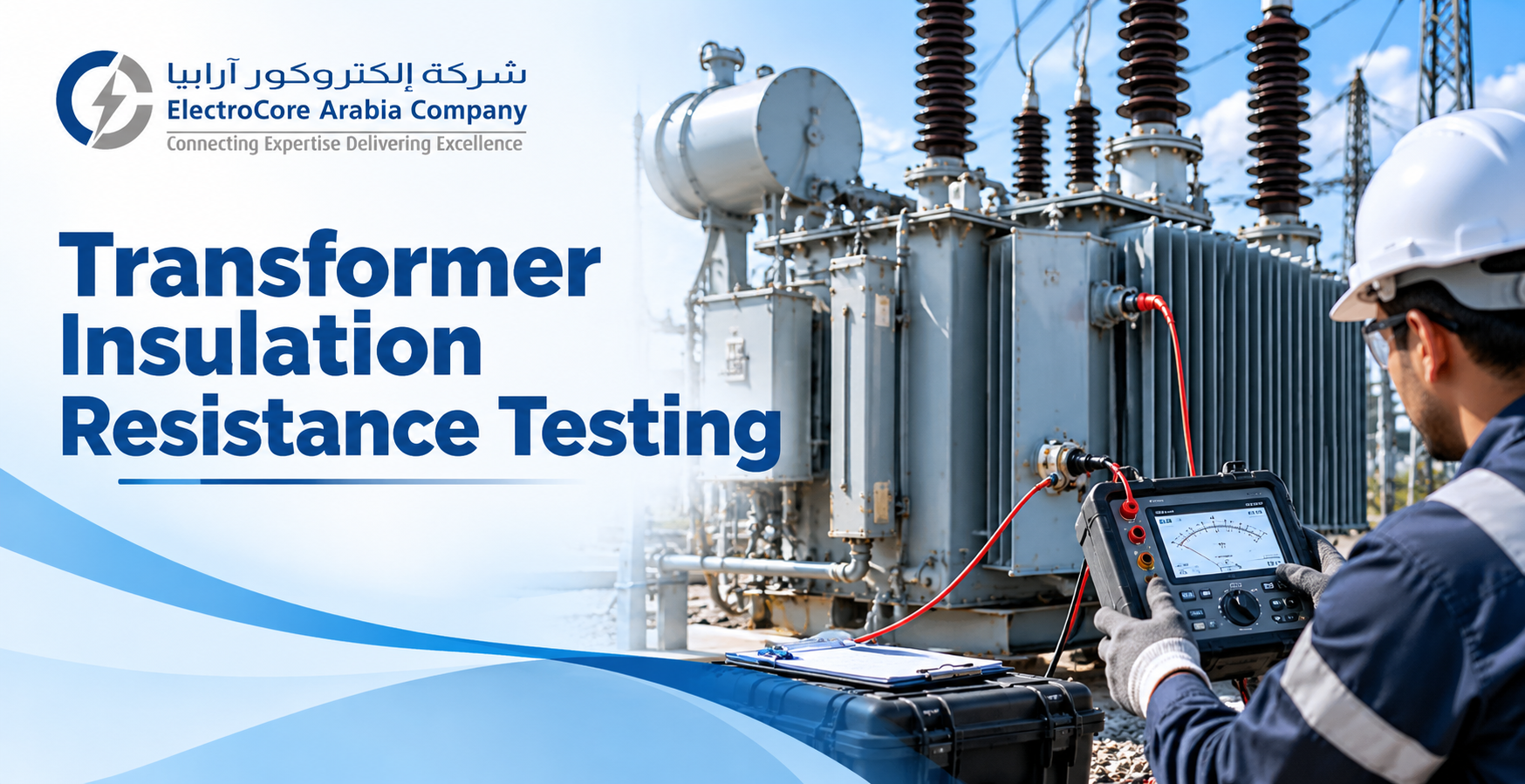
Transformer insulation plays a vital role in ensuring electrical safety, operational reliability, and equipment performance. Over time, insulation materials can deteriorate due to moisture, excessive heat, contamination, ageing, and electrical stress. If these issues remain undetected, they may lead to electrical faults, unexpected shutdowns, expensive repairs, or transformer failure.
Transformer insulation resistance testing is an essential electrical maintenance procedure used to assess insulation between transformer windings and between windings and earth. It helps maintenance engineers identify potential insulation problems before they develop into serious operational issues.
For industrial facilities, power plants, substations, and commercial infrastructure, regular transformer testing supports preventive maintenance and improves the reliability of electrical distribution systems.
In this complete guide, we explain how transformer insulation resistance testing works, the equipment required, the testing procedure, how to interpret readings, and why regular testing is important.
Transformer insulation resistance testing measures the resistance offered by insulating materials to the flow of direct current. It helps determine whether insulation is adequately preventing unwanted electrical leakage between conductors.
The test is generally performed using an insulation resistance tester, commonly known as a megohmmeter or Megger. The instrument applies a specified DC test voltage and measures the resulting leakage current to calculate insulation resistance, typically expressed in megohms (MΩ) or gigohms (GΩ).
Higher resistance readings generally indicate better insulation performance, while lower readings may suggest moisture, contamination, deterioration, or other insulation-related problems.
However, a single reading cannot establish the complete condition of a transformer. Results must be evaluated according to the transformer design, voltage rating, temperature, manufacturer recommendations, applicable standards, and historical test data.
Regular transformer insulation resistance testing provides valuable information about electrical insulation and helps maintenance teams make informed decisions.
Insulation resistance measurements can help identify developing problems associated with moisture ingress, dirt, ageing, and surface contamination. Detecting these conditions early allows maintenance teams to investigate before a more serious failure occurs.
Damaged insulation can increase the risk of electrical faults, flashovers, and equipment damage. Testing helps identify potential insulation weaknesses and supports appropriate corrective maintenance.
Transformer failures can interrupt production, disrupt power distribution, and affect critical industrial operations. Planned testing helps maintenance teams identify abnormal readings and schedule inspections or repairs more effectively.
Comparing current measurements with previous test results helps engineers understand changes in insulation condition over time. This information supports maintenance planning and helps prioritise transformers that require further investigation.
Identifying insulation deterioration early can help prevent avoidable damage and support the long-term reliability of transformers.
Before performing transformer insulation resistance testing, technicians should ensure that the correct equipment is available.
Insulation resistance tester: A calibrated megohmmeter suitable for the transformer and intended test voltage.
Electrical safety equipment: Appropriate insulated gloves, protective clothing, safety footwear, and other required personal protective equipment.
Test leads and connections: Properly rated leads compatible with the testing instrument.
Lockout/tagout equipment: Used to isolate the transformer and prevent accidental energisation.
Temperature measuring instrument: Helps record the transformer or insulation temperature for meaningful comparisons.
Testing documentation: Previous test reports, transformer specifications, and manufacturer instructions.
The selected test voltage must be appropriate for the equipment being tested. Applying an unsuitable voltage can damage sensitive components or produce misleading results.
Following a consistent testing procedure improves measurement reliability and supports safe maintenance practices.
Disconnect the transformer from all relevant power sources and isolate associated circuits. Apply the required lockout/tagout procedures and verify the absence of voltage using an appropriately rated instrument.
Only qualified personnel should carry out this work under an approved electrical safety procedure.
Ensure the transformer is safely discharged before connecting the test instrument. Disconnect or isolate components that could affect the test, following the manufacturer’s instructions.
Record relevant information, including transformer identification, rated voltage, ambient conditions, insulation temperature, and the reason for testing.
Choose the DC test voltage according to the transformer manufacturer’s recommendations, applicable standards, insulation system, and equipment condition.
There is no single test voltage suitable for every transformer. Special care is necessary when testing transformers with connected electronic equipment, instrument transformers, or sensitive accessories.
High-voltage winding to earth: Measures insulation resistance between the high-voltage winding and grounded components, with other windings treated according to the approved test arrangement.
Low-voltage winding to earth: Assesses insulation resistance between the low-voltage winding and earth.
High-voltage winding to low-voltage winding: Evaluates insulation between the two winding systems.
The exact connections depend on transformer construction and the manufacturer’s testing procedure. Record each reading together with the applied voltage and measurement duration.
Depending on the procedure, readings may be recorded at intervals such as 30 seconds and 60 seconds, or over a longer period. A one-minute measurement is commonly used in insulation resistance testing, while additional measurements may be needed for diagnostic analysis.
Consistent timing is important when comparing results from different maintenance periods.
After the test, discharge the tested winding and associated components according to the instrument manufacturer’s instructions and the approved safety procedure. Insulation systems can retain electrical charge after the test voltage has been removed.
Verify that the equipment is safely discharged before handling connections or returning it to service.
One of the most common questions about transformer insulation resistance testing is what reading is considered acceptable.
There is no universal minimum insulation resistance value that applies to every transformer. Acceptable readings depend on transformer voltage rating and design; type and condition of insulation; oil-filled or dry-type construction; insulation temperature and moisture content; test voltage and measurement duration; manufacturer specifications and applicable standards; and previous test results and operating history.
A high resistance reading is generally favourable, but it should not automatically be interpreted as proof that a transformer is free from defects. Similarly, a lower reading does not necessarily mean the transformer must be replaced.
Engineers should compare results against manufacturer guidance, relevant standards, and temperature-corrected historical measurements where appropriate. Abnormal or declining readings should prompt further investigation.
Factors That Affect Transformer Insulation Resistance Test Results
Moisture: Water absorbed by insulation can reduce its electrical resistance and indicate a need for further assessment.
Temperature: Insulation resistance commonly decreases as temperature increases. Comparisons should account for temperature differences using an appropriate correction method.
Contamination: Dust, conductive deposits, oil contamination, and surface dirt may affect measured resistance, depending on their location and characteristics.
Insulation ageing: Prolonged thermal and electrical stress can gradually deteriorate insulation materials and reduce their performance.
Testing conditions: Poor connections, incorrect test voltage, inconsistent measurement duration, and unsuitable test arrangements can affect the results.
Understanding these factors helps engineers distinguish between normal measurement variations and genuine insulation concerns.
To improve testing consistency and reliability, maintenance teams should follow these best practices:
1. Follow the manufacturer’s instructions and applicable electrical safety standards.
2. Use a calibrated insulation resistance tester with suitable voltage and measurement ranges.
3. Record test voltage, duration, temperature, and equipment identification.
4. Compare readings with previous results rather than relying on a single measurement.
5. Investigate unexplained changes or consistently declining resistance values.
6. Follow appropriate discharge and grounding procedures after testing.
7. Combine insulation resistance measurements with other diagnostic methods when necessary.
For comprehensive condition assessment, insulation resistance testing may be complemented by insulation power factor or dissipation factor testing, winding resistance measurements, transformer oil testing, and other suitable diagnostic procedures.
Each method provides different information, so test selection should be based on the transformer’s condition and maintenance requirements.
Testing may be appropriate during commissioning, after installation, following major maintenance or repairs, and as part of a planned preventive maintenance programme.
It may also be recommended when a transformer has experienced prolonged shutdown, suspected moisture exposure, abnormal operating conditions, or signs of insulation deterioration.
Testing frequency should be determined by the equipment manufacturer’s recommendations, operating environment, criticality of the electrical system, historical test results, and applicable maintenance standards.
Transformers operating in demanding industrial environments may require closer condition monitoring than equipment operating under stable conditions.
Reliable transformer operation requires more than occasional electrical measurements. A structured maintenance programme helps identify developing faults, assess equipment condition, and reduce the risk of unexpected outages.
ElectroCore Arabia supports industrial and electrical infrastructure requirements through transformer-related services and maintenance solutions.
If your facility requires professional inspection, testing, or maintenance support, explore our transformer services.
You can also explore our transformer maintenance solutions through the transformer maintenance services page.
Working with experienced electrical maintenance professionals helps ensure that testing is performed safely, results are interpreted correctly, and appropriate corrective actions are identified.
Transformer insulation resistance testing is an important part of preventive electrical maintenance. It helps assess insulation condition, identify potential deterioration, and support reliable transformer operation.
By following the correct testing procedure, selecting suitable test voltages, recording measurements consistently, and comparing results with historical data, maintenance teams can make better-informed decisions about transformer health.
However, insulation resistance testing should not be treated as a standalone guarantee of transformer reliability. Combining it with appropriate diagnostic tests and a planned maintenance programme provides a more complete assessment of equipment condition.
For industrial facilities seeking dependable transformer performance, regular testing and professional maintenance can help reduce operational risks, support electrical safety, and improve long-term equipment reliability.
Need professional transformer maintenance support? Visit ElectroCore Arabia to explore transformer-related services for your facility.
Copyright © 2026
ElectroCore Arabia Company. All Rights Reserved. Powered by Webtechnomind IT Solutions Pvt. Ltd
Sunday to Thursday: 8 am to 5 pm
Saturday: 9 am to 4 pm
Friday: Holiday
Copyright © 2026
ElectroCore Arabia Company. All Rights Reserved. Powered by Webtechnomind IT Solutions Pvt. Ltd